Reading a token unlock schedule
Future supply arrives on a published timetable. Reading that timetable tells you more about the coming months than most analysis of the chart does.
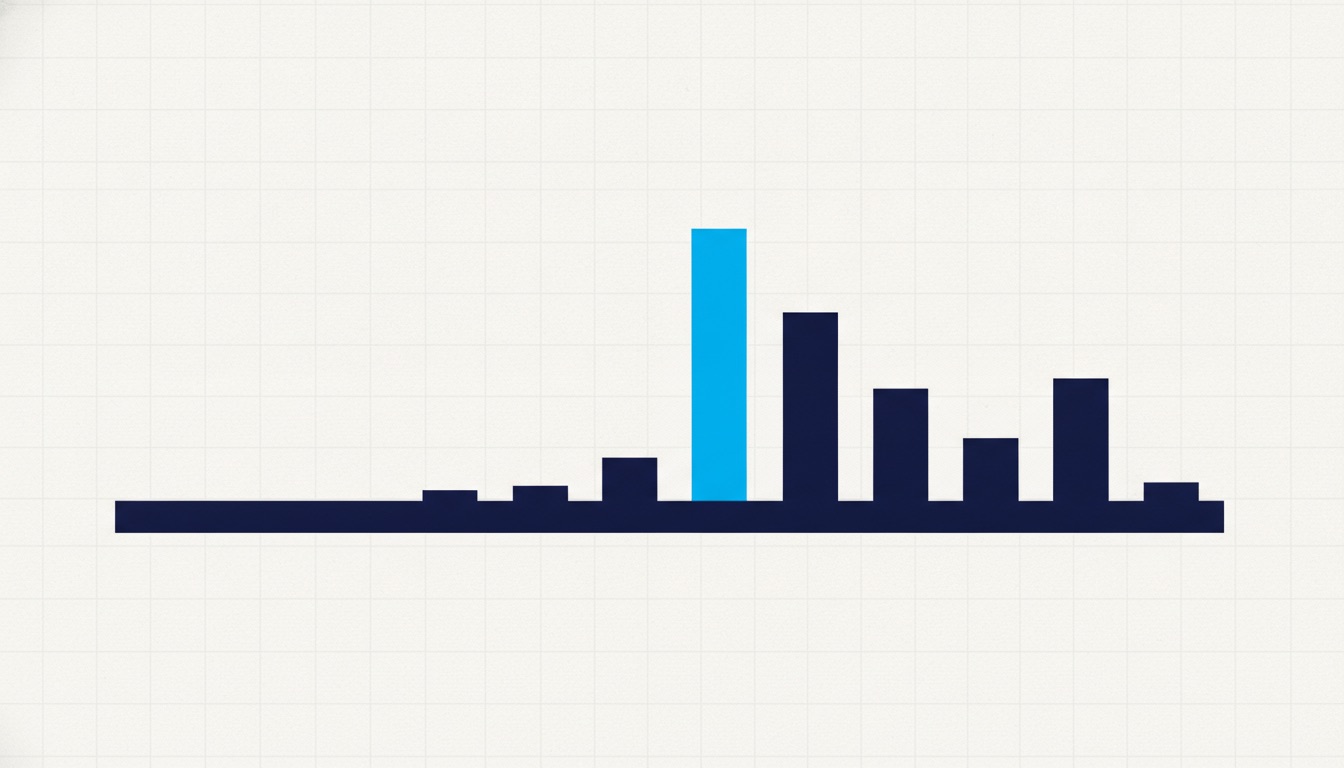
For most tokens the majority of eventual supply does not exist yet, and the plan for creating it is public. That plan is more informative about the next several months than a great deal of what passes for analysis, and reading it costs nothing.
The three things a schedule tells you
A schedule answers when tokens unlock, how many, and to whom. All three matter and the third is the one most often skipped.
Timing is usually expressed relative to a launch date, with a cliff followed by a vesting period. Size is expressed as a proportion of total supply. Recipients are grouped: team, early investors, treasury, ecosystem incentives, public sale. Those groups behave differently and the differences are not subtle.
Cliffs concentrate what vesting spreads
A cliff releases nothing until a date and then releases a tranche at once. Vesting releases gradually, often monthly, over a period after that.
The shape matters more than the total. Two projects issuing the same proportion over the same period present very different situations if one drips it evenly and the other releases it in three large steps. Clustered cliffs create dates where a large quantity becomes transferable simultaneously, and everyone holding a calendar can see them coming.
Cost basis is why recipients differ
The reason to care who receives an allocation is that different holders acquired it at different prices, and that shapes what they do next.
An early investor whose allocation was priced at a small fraction of the current market faces a straightforward decision at unlock. A team allocation is subject to the same arithmetic plus reputational and often contractual constraints. A treasury allocation is typically spent over years to fund work rather than sold as a position. Ecosystem incentives are designed to be distributed and are usually sold quickly by whoever receives them, because that is what an incentive is for.
None of this is an accusation. It is the observation that a schedule listing recipients is describing a set of distinct incentives, and treating the total as one undifferentiated number discards the useful part.
Proportion beats absolute size
An unlock is meaningful relative to what already trades, not in isolation. A tranche equal to a small fraction of circulating supply is one thing; a tranche comparable to circulating supply is another entirely.
The second comparison worth making is against traded volume. Supply arriving that is large relative to the daily volume of the market it arrives into has a different character from supply that could be absorbed in an hour. Both figures are available and the ratio is the interesting one.
Our explainer on the three supply figures covers the denominators.
What a schedule does not tell you
Being honest about the limits: an unlock makes tokens transferable. It does not mean they are sold, and assuming a mechanical price effect on each unlock date is a stronger claim than the schedule supports. Markets anticipate published events, and an unlock everyone has known about for two years is not news on the day it happens.
Schedules are also revisable. Teams have extended vesting, renegotiated investor terms and altered emissions. A schedule is a stated intention with a governance process attached, not a physical constraint — the only genuinely fixed supply parameters are the ones enforced by the protocol itself.
Where to find it, and what its absence means
Schedules are normally published in project documentation, a tokenomics section, or the original sale terms. Several data providers aggregate them, with the usual caveat that aggregation introduces transcription errors — prefer the primary source where a figure matters.
If no schedule is published, that is itself the finding. A project that will not say how much supply is coming, when, or to whom has made a decision about how much scrutiny it wants, and the reasonable response is to treat unspecified future supply as unbounded rather than as zero.
Emissions are a schedule too
Unlocks release tokens that already exist. Emissions create new ones, typically as rewards to validators or liquidity providers, and they arrive continuously rather than on cliff dates.
The distinction matters because emissions are frequently omitted from unlock discussions while being the larger source of new supply. A project with a modest unlock schedule and aggressive emissions is issuing more than one with the reverse, and only one of those appears on an unlock calendar.
Emission rates are usually set by protocol parameters and are often adjustable by governance, which makes them a moving figure rather than a fixed one. Where an emission rate is scheduled to decline, that schedule is worth reading with the same attention as an unlock.
Reading the accompanying language carefully
Schedules come with prose, and the prose is where imprecision lives. “Locked” can mean enforced by a contract that nobody can override, or it can mean subject to a commitment the holder has made and could break. Those are very different, and both get the same word.
The check is whether the lock is on-chain and verifiable. A contract holding tokens until a block height is a constraint. A statement of intent in a blog post is a preference. Where documentation does not distinguish, assume the weaker version until shown otherwise.
How to use the schedule without over-reading it
The reasonable use is contextual rather than predictive. Knowing that a large tranche unlocks to early investors next quarter does not tell you what price does; it tells you that a specific, foreseeable increase in potential supply is arriving and that anyone claiming surprise afterwards was not looking.
It is also a useful honesty test of a project’s own communication. A team that publishes its schedule clearly, notes upcoming unlocks in its updates, and explains changes when they occur is behaving differently from one that publishes a schedule once and never mentions it again. That difference is observable and costs nothing to check.