Proof of reserves: what it demonstrates and what it leaves out
A proof of reserves answers one narrow question about one side of a balance sheet. The question people think it answers is a different and much harder one.
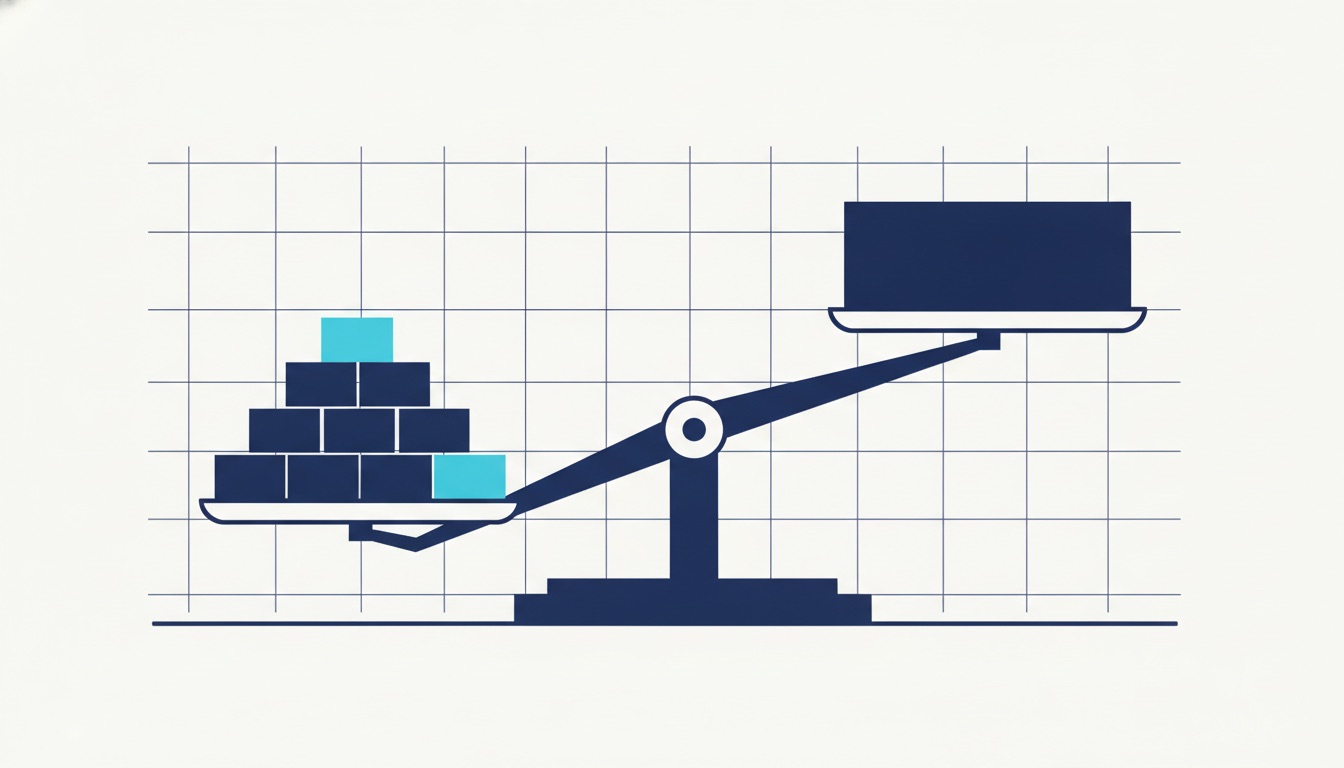
After any large custodial failure, proof of reserves gets offered as the answer. It is a real technique that demonstrates something genuine. It is also routinely presented as showing far more than it does, and the gap matters most precisely when it is being used to reassure you.
What the technique actually does
In its usual form, a custodian demonstrates two things. First, that it controls a set of on-chain addresses, typically by signing a message with the corresponding keys. Second, that the balances in those addresses meet or exceed the sum of customer balances, often using a cryptographic structure that lets an individual customer verify their own balance was included without revealing anyone else’s.
That second part is genuinely clever, and it addresses a real problem: it means the total can be audited without the custodian publishing everybody’s holdings.
Omission one: liabilities
Reserves are one side of a balance sheet. Solvency is the relationship between two.
A proof of reserves shows assets held. It does not show what is owed — not to customers who were included, and critically not to anyone else. Loans, obligations to affiliated entities, and liabilities that do not appear in the customer ledger are all outside the scope of the exercise. A custodian holding assets equal to customer balances while owing a larger amount elsewhere passes a proof of reserves and is insolvent.
Unless a proof of reserves is accompanied by a proof of liabilities, it is a partial picture presented in a way that reads as a complete one.
Omission two: time
A proof describes a moment. Assets can be moved the following block.
The historical failure mode here is well established in principle: assets are borrowed to satisfy an attestation and returned afterwards. Nothing about a point-in-time snapshot can detect this. Frequent, unpredictable proofs make it harder; a single quarterly one makes it easy.
Omission three: control
Signing from an address proves control at the moment of signing. It does not prove the assets are unencumbered — that they have not been pledged, lent, or committed elsewhere. Nor does it prove that the entity controlling the keys is the entity that owes you the balance, which matters when a group has many corporate entities across several jurisdictions.
What it does prove, which is not nothing
It is worth being fair to the technique. A custodian that regularly publishes proofs, allows individual customers to verify their inclusion, and engages a third party to attest to the liability side is doing considerably more than one that publishes nothing. The direction is right even where the coverage is partial.
What should be resisted is the leap from “this custodian publishes proof of reserves” to “this custodian’s assets are safe”. The first is a statement about a procedure; the second is a claim about solvency, jurisdiction, corporate structure and conduct.
How to read one
Four questions make the difference between reading a proof and being reassured by one: Does it cover liabilities as well as assets? How often is it produced, and is the timing predictable? Who attests to it, and what exactly did they attest to? And can you verify your own balance’s inclusion, or are you taking the total on trust?
Our glossary entry defines the term; this is what to do with it. The broader question of what custody means for your funds is covered in who actually holds your crypto.
What a liability proof would require
Since the missing half is liabilities, it is worth understanding why it is hard rather than simply absent.
Assets are provable because they sit on a public ledger: control can be demonstrated cryptographically and balances read by anyone. Liabilities are internal records. Proving that a published customer-balance total is complete means proving a negative — that no customer was omitted and no obligation excluded — and no cryptographic technique establishes that on its own.
The usual approach is a construction that lets each customer verify their own balance was included in the total, so widespread omission becomes detectable if enough people check. That is a genuine improvement, and it depends on customers actually checking, which most never do. Beyond that, verifying that the liability set is complete requires access to internal records, which is an audit rather than a proof.
Attestation and audit are not the same word
This distinction does most of the work in practice and is routinely blurred in announcements.
An attestation reports on specific figures at a point in time against agreed criteria. The practitioner confirms the numbers presented match the records examined. The scope is defined by the engagement and can be narrow.
An audit is a broader examination against a recognised framework, with an opinion on whether financial statements as a whole are fairly stated. It considers going concern, related-party transactions and internal controls.
Both are legitimate. They answer different questions, and an announcement citing a “fully audited proof of reserves” is often describing an attestation. The document itself will say which, in its scope paragraph, and that paragraph is the part worth reading.
What actually protects a customer
Proof of reserves is a transparency measure, not a protection mechanism. What determines whether you are made whole after a failure is the legal position: whether assets were segregated, whether customers rank as owners or as unsecured creditors, which jurisdiction governs, and which entity in a corporate group actually holds the balance.
Those questions are answered in terms of service and regulatory registration rather than in cryptographic proofs, and they are decided long before any failure occurs. A regular, well-scoped proof of reserves alongside clear segregation is a meaningfully better position than either alone — and a proof published in the absence of the legal groundwork is the weaker half being shown because it photographs better.